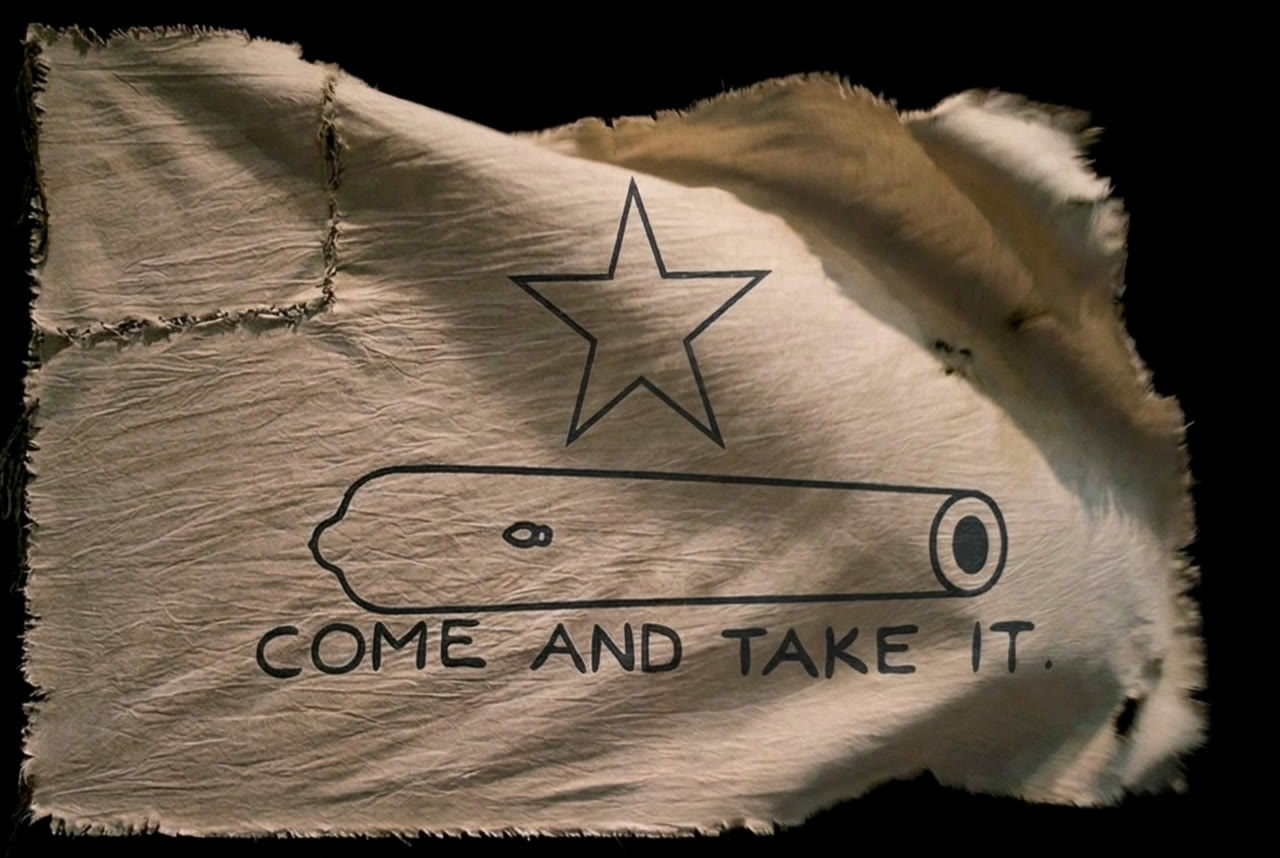
If you’ve ever seen a Texas flag with a black star, an image of a cannon, and the three words “Come and Take It,” you’ve seen one of the most recognizable symbols in Texas. It came out of a two-week standoff in a small town on the Guadalupe River in the fall of 1835. It was a dare. It was a flag. And it turned out to be the opening shot of the Texas Revolution.
This is the complete story of Come and Take It — the people, the cannon, the flag, the standoff, and the single shot that changed Texas. Read it before you visit Gonzales, and every stop on the historic square will mean more.
The Setup: A Small Town, A Big Frontier
By the early 1830s, the town of Gonzales was a frontier outpost. Established in 1825 by Empresario Green DeWitt as the capital of his colony — a grant from the Mexican government to settle families on the Guadalupe River — Gonzales was the western edge of the Anglo-American settlement in Mexican Texas. Life on the DeWitt Colony’s frontier was dangerous. Comanche raids were a constant threat. Settlers lived in scattered log cabins, farmed corn, hunted, and kept one eye on the tree line at all times.
To help the colonists defend themselves, the Mexican government in 1831 loaned the town a small bronze six-pound cannon. It was a relatively unremarkable weapon — too small to be decisive in a real military engagement, but loud enough to scare off a raiding party. The cannon sat in Gonzales for four years, unused, a community asset and a symbol of trust between the Mexican government and its colonists.
That trust was about to evaporate.
1835: Tensions Rise
By 1835, relations between the Mexican central government under President Antonio López de Santa Anna and the Anglo colonists in Texas had soured. Santa Anna had centralized power, suspended the liberal 1824 constitution, and begun clamping down on the semi-autonomous Texas settlers. Protests in the colonies grew. Militias organized. Arms flowed.
In September 1835, Mexican authorities in San Antonio de Bexar — under the command of Colonel Domingo de Ugartechea — ordered that the Gonzales cannon be returned. With tensions so high, Ugartechea wanted the weapon out of colonial hands. The town’s sheriff, Joseph Clements, and the colony’s de facto leaders, including Alcalde Andrew Ponton, refused. They stalled. They sent letters. They bought time.
Ugartechea responded by sending a small detachment — five soldiers under Corporal Casimiro De León — to collect the cannon peacefully. Gonzales arrested them. A larger force was ordered to follow.
The Old Eighteen
As word spread that Mexican troops were coming in force, a small group of Gonzales settlers — the Old Eighteen — took up positions along the Guadalupe River to delay any crossing. Their names are preserved in local history and at the Gonzales Memorial Museum. They were ordinary men — farmers, smiths, merchants — but they held the river ford for days while messengers ran to other colonies for reinforcements.
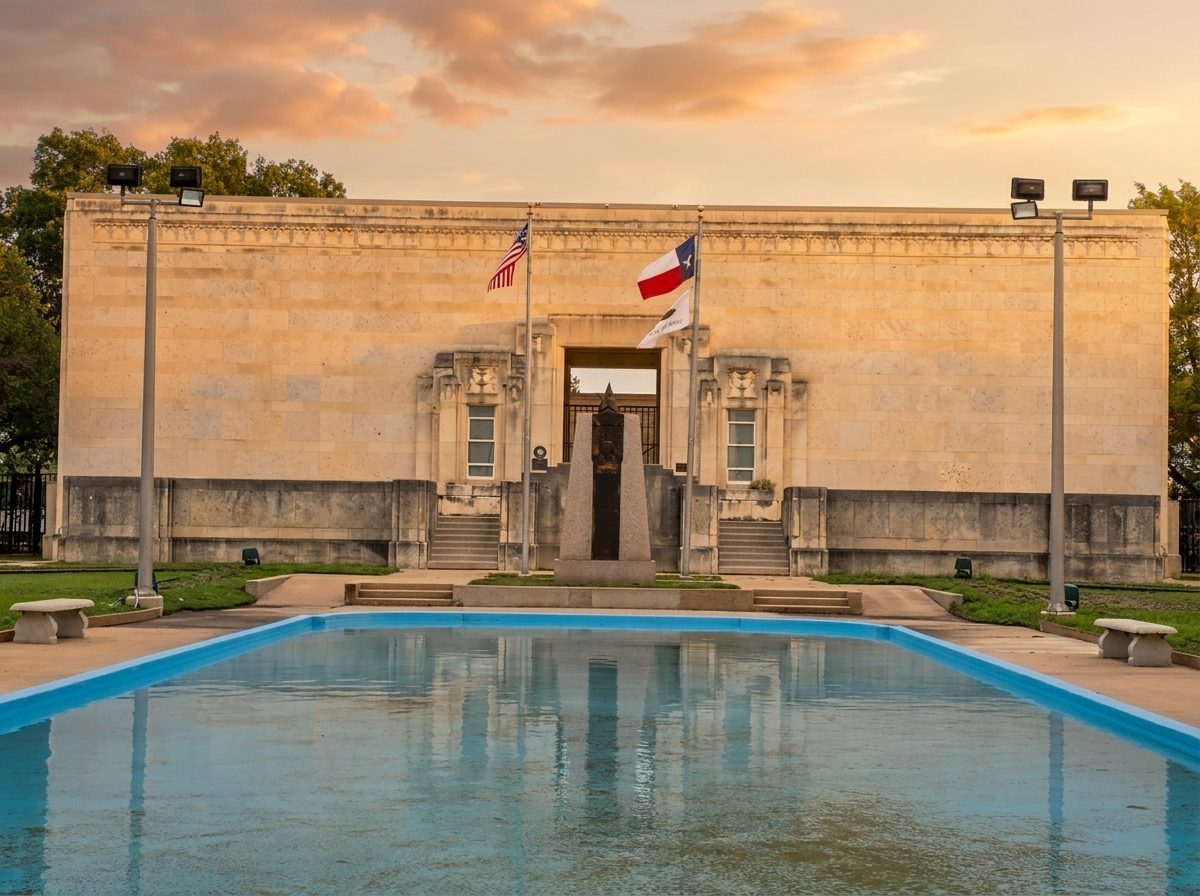
Meanwhile, according to local history preserved by the Texas Legacy in Lights project at texaslegacyinlights.com, the cannon itself was hidden. Colonists moved it into a peach orchard on the outskirts of town to keep it out of Mexican hands until a stand could be made.
The Mexican Forces Arrive
On September 29, 1835, a larger Mexican detachment arrived on the opposite bank of the Guadalupe under Lieutenant Francisco de Castañeda. Castañeda had roughly 100 dragoons with him. The river was too high to ford quickly. Castañeda demanded the cannon. The Old Eighteen, reinforced over the next several days by volunteers from nearby DeWitt, Austin, and Bastrop colonies, refused.
Castañeda pulled his men back from the river and camped, waiting for the water to drop and the Texians to lose patience. Neither happened.
The Flag
As volunteers streamed into Gonzales, the town prepared a rallying symbol. According to tradition preserved locally and documented at texaslegacyinlights.com, Sarah DeWitt — the widow of Empresario Green DeWitt — and her daughter Evaline DeWitt took the lead in making a defiant flag. They used white cotton fabric, reportedly cut from Naomi DeWitt’s wedding dress, and painted or sewed onto it a black image of the cannon, a single black star, and three words in rough black script:
COME AND TAKE IT.
The message was blunt, a deliberate echo of the ancient Greek phrase molon labe — the reply King Leonidas of Sparta supposedly gave Persian King Xerxes at Thermopylae when ordered to surrender his weapons.
The Texian Force Grows
By October 1, volunteers from nearby towns had poured into Gonzales. Among the arrivals:
- Colonel John Henry Moore — a veteran militia officer from Fayette County, who took overall command.
- Captain Albert Martin — a Gonzales leader who would later go on to carry William B. Travis’s famous “To the People of Texas & All Americans in the World” letter from the Alamo.
- Additional volunteers from Fayette, DeWitt, and Austin colonies.
All told, the Texian force numbered about 140 men — a small but determined militia facing a trained Mexican military unit.
The Cannon Is Retrieved
With their numbers now sufficient, the Texians brought the hidden cannon out of the peach orchard. It was loaded onto a rough wooden carriage. Blacksmith Noah Smithwick and others worked through the night to prepare it for firing. Lacking proper cannonballs, the Texians loaded the weapon with whatever scrap iron they could find — broken horseshoes, chain links, nails.
October 2, 1835: The First Shot
In the predawn hours of October 2, 1835, the Texians crossed the Guadalupe under cover of fog. They approached Castañeda’s camp and took position. As dawn broke, they unfurled the Come and Take It flag.
Castañeda requested a parley. The two commanders — Castañeda on one side, Moore on the other — met between the lines. Castañeda explained that he was following orders to retrieve the cannon. Moore explained that the Texians did not recognize Santa Anna’s centralist authority and would not surrender the weapon.
The parley ended. The Texians returned to their lines. The cannon was fired. Musket fire followed.
Casualties were minimal — possibly one Mexican soldier killed or wounded — and Castañeda, outnumbered and unwilling to escalate, withdrew his force back toward San Antonio de Bexar.
The Texas Revolution had begun.
What Happened Next
The victory at Gonzales, small as it was militarily, was enormous politically. Within days, volunteers from across Texas gathered at Gonzales to form the nucleus of what would become the Texian Army. Stephen F. Austin was named commander-in-chief. The army marched on San Antonio de Bexar in late October, besieging the city and eventually capturing it in December 1835.
The following year, 1836, brought the Alamo, Goliad, the Runaway Scrape, and the Battle of San Jacinto. By April 21, 1836, Texas was independent.
But it all started at Gonzales.
The Immortal 32
The Gonzales story carries one more devastating chapter. In late February 1836, as Santa Anna’s army besieged the Alamo, Lieutenant Colonel William Barret Travis wrote his famous letter calling for reinforcements. Only one community answered.
On March 1, 1836, thirty-two men from Gonzales slipped through Mexican lines and entered the Alamo. They became known as the Immortal 32 — the only reinforcements the Alamo ever received. Nine days later, on March 6, they died with every other Alamo defender.
It is difficult to overstate the loss to a town of a few hundred people. Every one of the 32 left behind family. Gonzales, within weeks, would be evacuated and burned on Sam Houston’s orders to keep the town out of Santa Anna’s hands during the Runaway Scrape.
What You Can See Today
Nearly 200 years later, Gonzales is still the town where all of this happened — and you can see the evidence with your own eyes.
The Cannon
The actual six-pound bronze cannon fired on October 2, 1835 is on display at the Gonzales Memorial Museum at 414 Smith Street. Admission is $5.
The Immortal 32 Memorial
Inside the same museum, a memorial honors the names of the 32 men who left Gonzales to reinforce the Alamo.
The Site of the Battle
A historical marker near the Guadalupe River marks the approximate site of the Battle of Gonzales. Ask locally for directions — it’s a quiet spot.
The 1887 Gonzales County Jail Museum
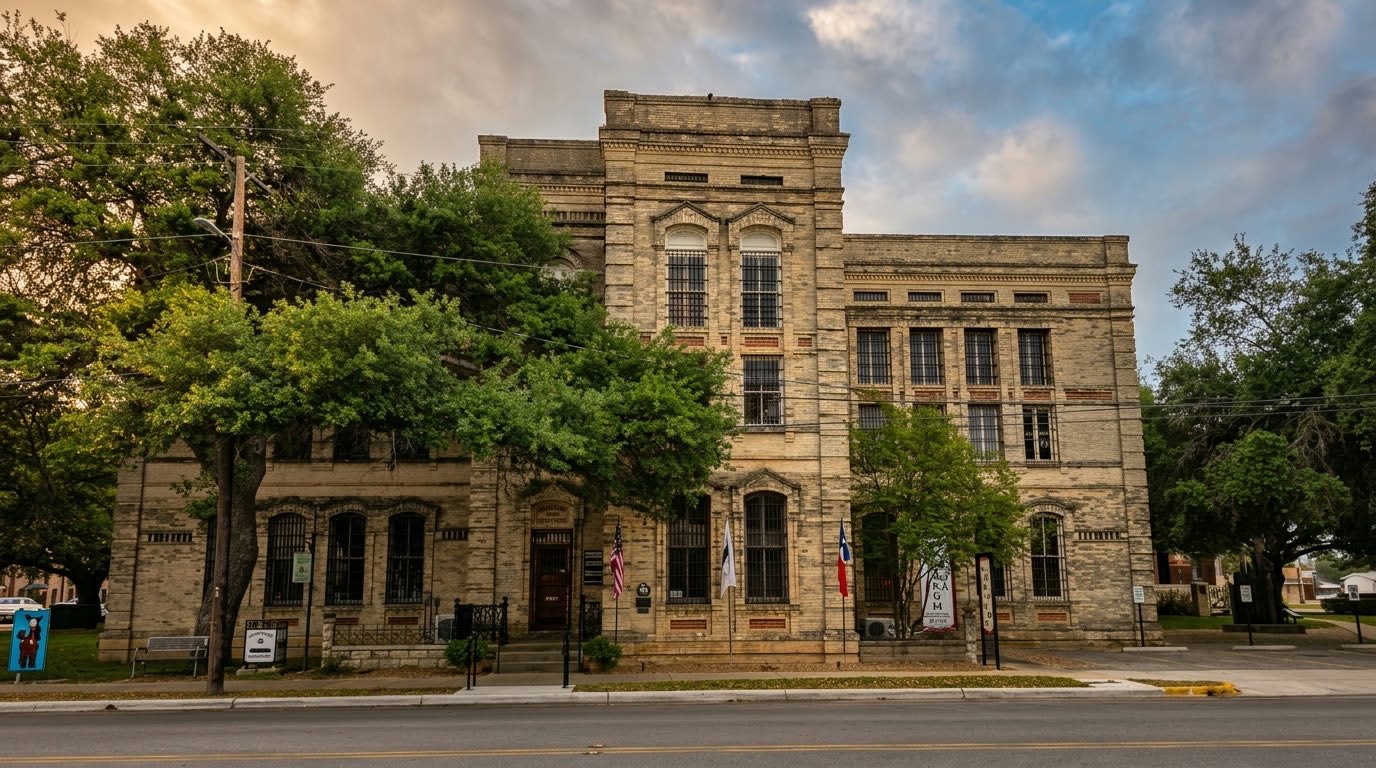
A short walk from the Memorial Museum, the jail preserves the weight of 19th-century Texas justice in a building that existed during the town’s Victorian rebirth.
The Historic Square
The downtown square is Gonzales’s post-burning rebuild — the town as it rose from the ashes of 1836. Most of the buildings date to the 1880s and 1890s. Walking the square is, in a literal sense, walking the recovery.
The Eggleston House
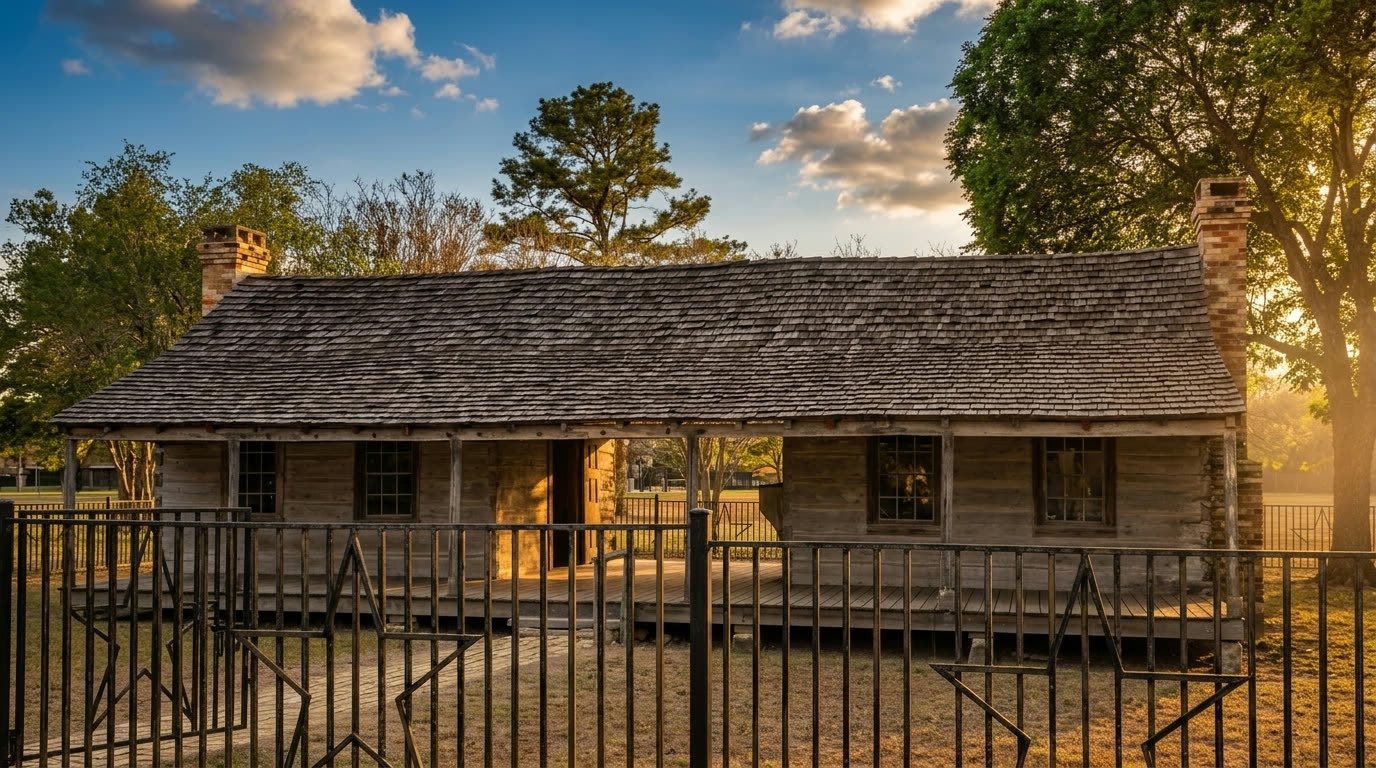
Believed to be the oldest standing structure in Gonzales, this 1840s dogtrot cabin is one of the few buildings to survive the broader 19th-century era and a direct architectural link to the frontier colony years.
Texas Legacy in Lights
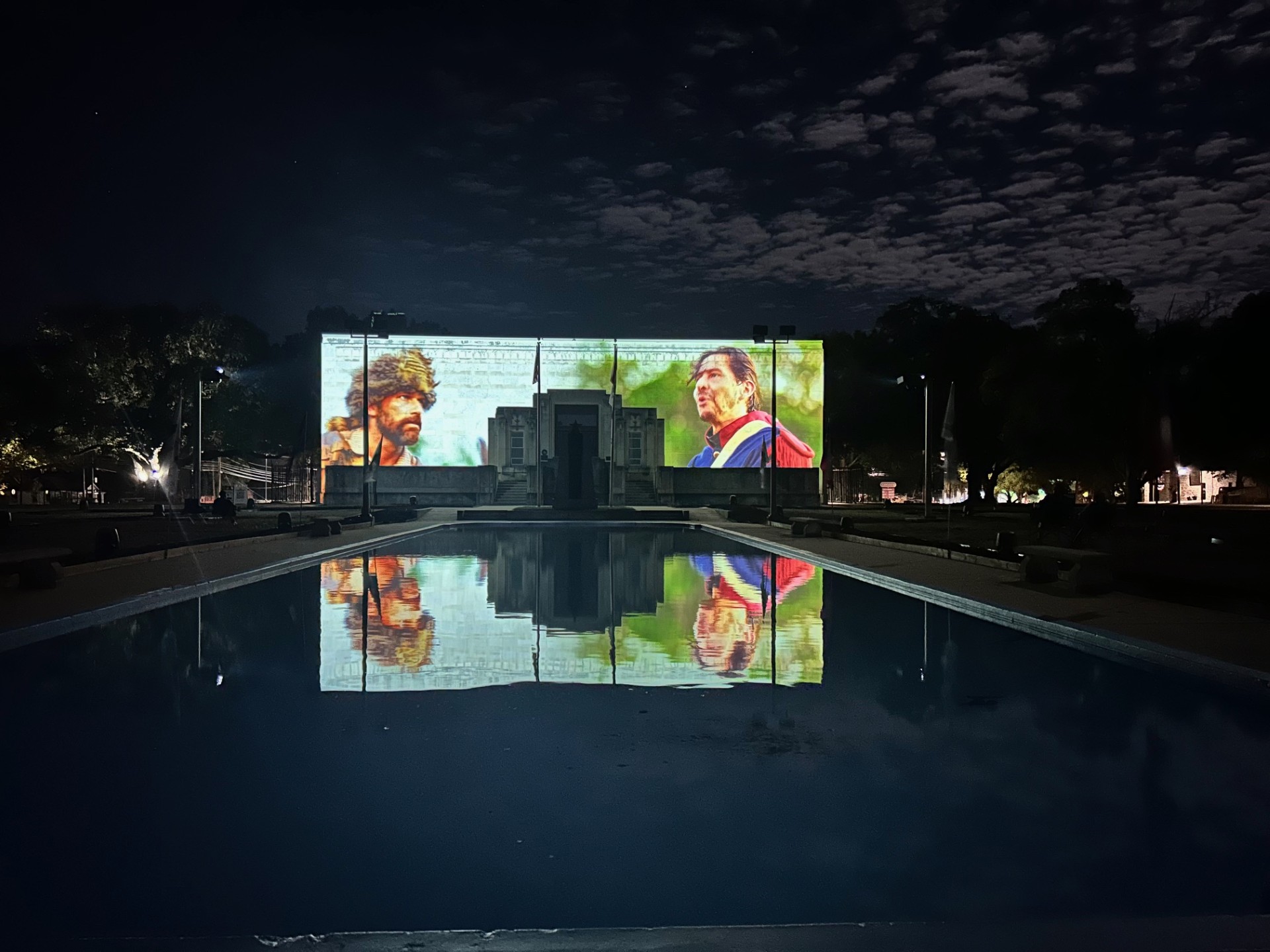
The free, nightly, 34-minute cinematic projection-mapping show on the facade of the Gonzales Memorial Museum tells this entire story — from the loan of the cannon, to Sarah DeWitt and the flag, to Moore and Martin and the Old Eighteen, to the peach orchard, to the river, to the Alamo, to the Runaway Scrape, to the return and rebuild. Summer showtimes (April–October): 8:25 p.m. and 9:15 p.m. Winter (November–March): 7:25 p.m. and 8:15 p.m. Tuesday through Sunday.
See the Texas Legacy in Lights Guide.
Why the Phrase Endures
“Come and Take It” endures in Texas culture because it’s not just about a cannon. It’s about a refusal — a community that, when told to give up a thing that mattered to them, said no, and then backed up the no. Texans wear that on T-shirts because it speaks to something that feels local and defiant and personal. And in Gonzales, on the same ground where the phrase was born, it still carries that weight.
Pair this article with the Gonzales, Texas History Guide, the Come and Take It Celebration Guide, and the Texas Legacy in Lights Guide for a complete picture of what happened here and why it still matters.
Final Word
The Come and Take It story is the origin story of Texas independence — earlier than the Alamo, earlier than San Jacinto, earlier than the Declaration of Independence on March 2, 1836. Everything that followed unfolded because eighteen settlers stood on a riverbank in late September 1835, a mother and daughter sewed a flag, and one hundred and forty Texians fired a loaded cannon just before dawn on October 2. Visit Gonzales once and stand in front of the cannon. You’ll never think of the Revolution the same way.