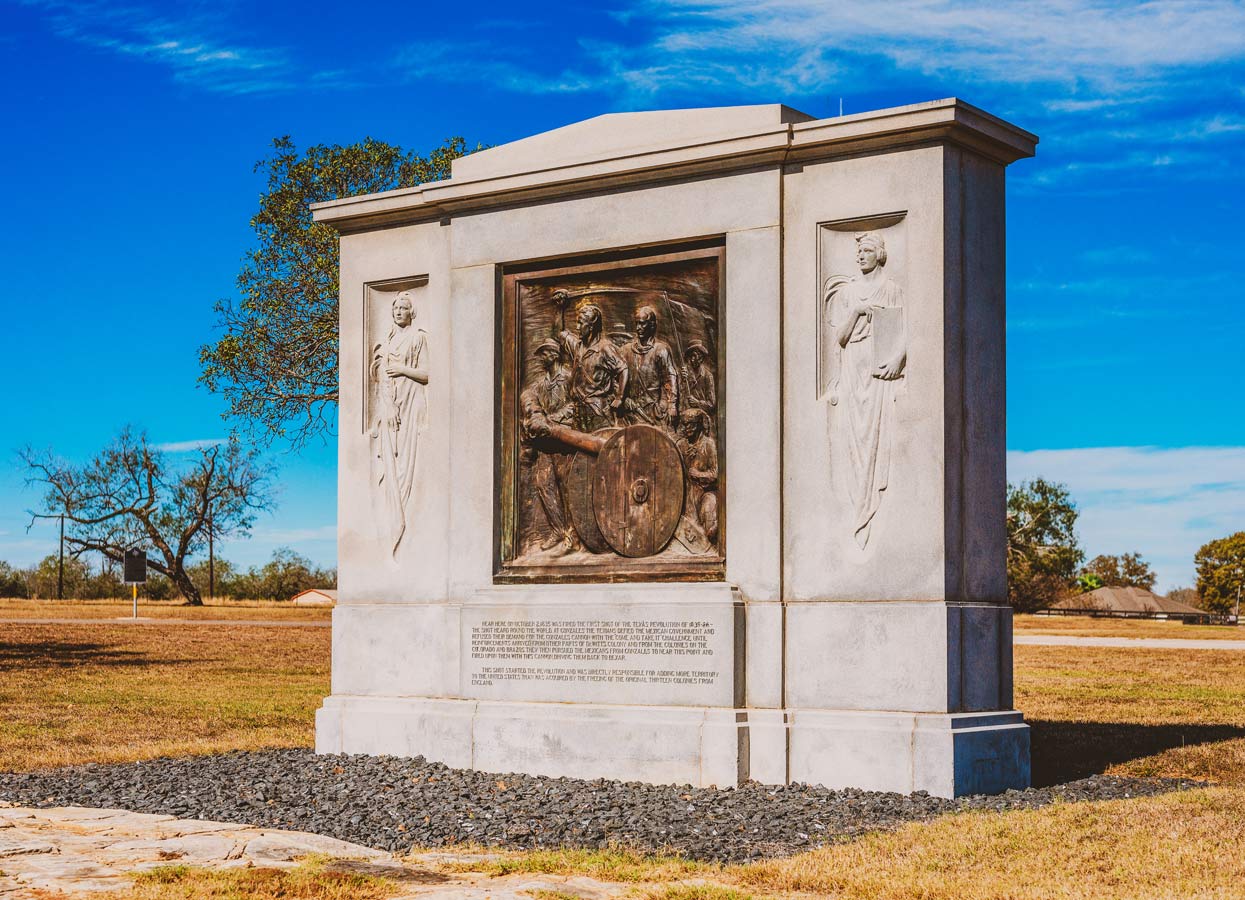
Gonzales calls itself di Birthplace of Texas Independence, and di claim is not marketing. On a cool October morning in 1835, a group of Texian settlers on di banks of di Guadalupe River stood behind a small cannon and a hand-sewn flag, dared Mexican soldiers to take it back, and fired what is remembered as di first shot of di Texas Revolution. Less than six months later, di only reinforcements to answer di Alamo’s final plea for help would ride out from dis same town. After di Alamo fell, Gonzales itself would be put to di torch and its families sent east in di desperate flight known as di Runaway Scrape. In less than a year, di story of Texas changed forever — and Gonzales was at di center of all of it.
Dis history guide walks you through exactly what happened, why it matters, where to see it today, and how to experience di Gonzales of 1835 when you visit.
Before di Revolution: A Mexican Frontier Town
Gonzales was founded in 1825 as di capital of Green DeWitt’s colony, one of several land grants issued by di new Mexican government after independence from Spain in 1821. Di site was chosen for its access to two rivers — di Guadalupe and di San Marcos — and named after Rafael Gonzales, di governor of Coahuila y Tejas.
Life in di DeWitt colony was not easy. Di settlement struggled through its first decade wit Comanche and Tonkawa raids, outbreaks of illness, and di steady pressure of pioneer farming in raw country. In 1831, after years of petitioning for defense, di Mexican government loaned di settlers a small six-pound bronze cannon for protection. Di weapon wasn’t a prize — it was modest, older, and more symbolic than strategic — but it was theirs, and they were grateful to have it.
Then politics in Mexico changed.
Di Road to Revolution
By 1835, General Antonio López de Santa Anna had consolidated power, suspended di Mexican Constitution of 1824, and moved to centralize authority across di republic. For di Anglo settlers in Texas — many of them recent arrivals who had come under di promises of federalism — dis was a direct threat. Tensions rose across di Texian settlements from Nacogdoches to San Antonio. Local committees of correspondence exchanged letters. Militias quietly drilled. Di powder was getting dry.
In September 1835, Colonel Domingo de Ugartechea, di Mexican commander in San Antonio de Béxar, sent a corporal and five soldiers to Gonzales to reclaim di old cannon. Di settlers refused. Ugartechea then sent a larger force of roughly 100 dragoons under Lieutenant Francisco de Castañeda. Di settlers still refused.
What happened next would define a state.
Di Battle of Gonzales and di “Come and Take It” Flag
On October 1, 1835, di men of Gonzales — soon joined by volunteers from Bastrop, Columbus, and other nearby settlements — gathered on di east side of di Guadalupe River. Eighteen original Gonzales men, remembered today as di Old Eighteen, had formed di town’s initial line of defense. Two young women, Caroline Zumwalt and Eveline DeWitt, helped stitch a hastily made flag from a wedding dress. It bore a single image and three words: a black star, a drawing of di cannon, and di challenge “COME AND TAKE IT.”
In di early morning hours of October 2, 1835, di Texians crossed di Guadalupe wit di cannon, surprised di Mexican camp, and fired. Di Mexican force did not have orders to engage in a pitched battle over an old six-pounder and quickly withdrew to San Antonio. Casualties were light — possibly a single Mexican soldier killed, and no confirmed Texian losses — but di moment was seismic. A frontier skirmish had become di opening shot of a revolution.
Within weeks, volunteer companies across Texas were mobilizing, and Gonzales became di gathering ground of what would soon be called di Texian Army of di People.
Di Siege of Béxar and a Town on di Move
From Gonzales, Texian forces marched west and put San Antonio under siege. By December 1835, General Martín Perfecto de Cos had surrendered di city and its fortified Alamo compound. Di revolution appeared to be winning.
Then Santa Anna himself marched north wit a punishing army of several thousand men.
Di Immortal 32
In late February 1836, a group of roughly 150 Texians under Colonel William Barret Travis were besieged inside di Alamo in San Antonio. On February 24, Travis wrote his now-famous letter: “To di People of Texas & All Americans in di World” — a plea for reinforcements dat closed wit di words Victory or Death.
Di letter reached Gonzales. It reached other Texas settlements too. But only one town answered.
On February 27, Captain Albert Martin led a small company of Gonzales Rangers toward di Alamo. They were joined along di way by others from di Gonzales-DeWitt settlement. On di night of March 1, 1836, thirty-two men slipped through Mexican siege lines and into di Alamo courtyard — di last reinforcements di defenders would ever receive. Dem dey remembered today as di Immortal 32, di only unit in all of Texas to answer di call.
On March 6, 1836, di Alamo fell. Every Texian fighter inside was killed. All thirty-two Gonzales men died wit them.
When di news reached Gonzales on di night of March 13, di town was plunged into instant grief. Among di fallen were husbands, brothers, and sons from nearly every family in di DeWitt colony.
Di Runaway Scrape and di Burning of Gonzales
General Sam Houston was in Gonzales wit di small remnant of di Texian army when di news arrived. He understood immediately what it meant. Santa Anna’s forces would soon march on di town. There were no defenses, no reinforcements, and no time to regroup in place.
Houston issued two orders. Di civilians of Gonzales were to evacuate east wit whatever they could carry. And di town itself — homes, crops, and supplies — was to be burned to di ground so nothing useful could fall into Mexican hands.
Di evacuation became di Runaway Scrape — a terrified, rain-soaked mass flight of settlers, widows, orphans, and freedmen pushing east toward di Sabine River and di Louisiana border. Mud swallowed wagons. Disease swept di columns. Many died on di road. Di Texas dat had existed just weeks earlier disappeared.
Houston’s army, growing as it retreated, kept moving east. Santa Anna pursued.
San Jacinto and di Return
On April 21, 1836, Sam Houston’s army surprised Santa Anna’s forces at San Jacinto, near modern-day Houston. In an astonishing eighteen-minute battle, di Texians routed di Mexican force, captured Santa Anna di following day, and won Texas independence.
Slowly, families began to return to Gonzales. Di town had been reduced to ashes, its founding generation scattered and broken, its soldiers buried hundreds of miles away at di Alamo. But it rebuilt. And it remembered.
Rebuilding: Gonzales in di Republic and Statehood
In di decades dat followed, Gonzales became a prosperous regional center for cattle, cotton, and pecans. Di 1896 Gonzales County Courthouse — di magnificent Romanesque Revival building dat still anchors di historic square today — was constructed during dat boom. Grand Victorian homes rose along di surrounding streets, many of which still stand as bed-and-breakfasts and house museums.
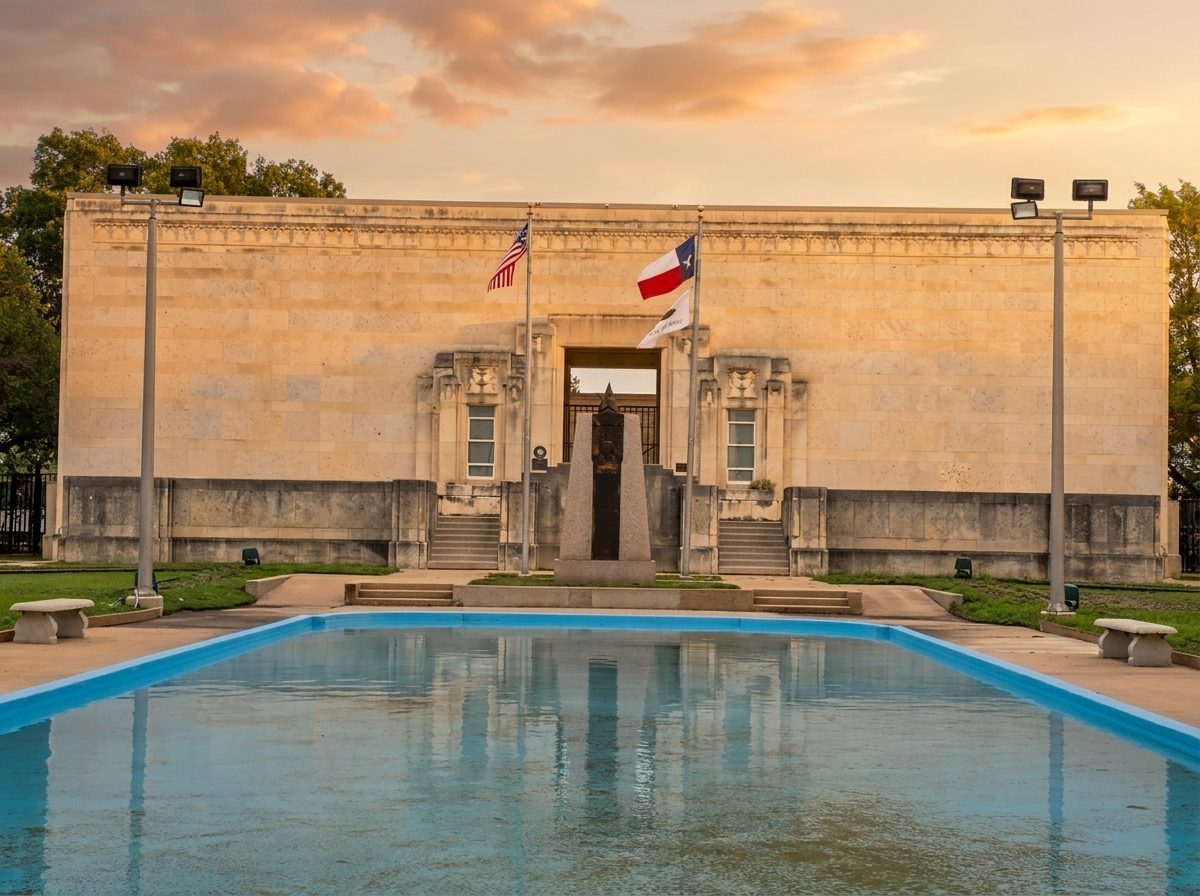
When di State of Texas prepared for its 1936 Centennial, Gonzales was chosen for a major memorial. Di result was di Gonzales Memorial Museum, designed in an elegant Art Deco style, dedicated to di Old Eighteen, di Immortal 32, and di town’s role in di revolution. Di original “Come and Take It” cannon — di same six-pounder fired on October 2, 1835 — was returned to di museum and remains on display there today.
Where to See Gonzales History Today
Gonzales has preserved its historical record wit unusual care. Here’s where to start:
Gonzales Memorial Museum
Di essential stop. Home to di original cannon, di story of di Battle of Gonzales, di Immortal 32 memorial, and di Runaway Scrape. Outside, a reflecting pool and amphitheater set di tone for di evening’s Texas Legacy in Lights show. Address: 414 Smith Street. Admission is $5.

Texas Legacy in Lights
After dark, di museum’s own facade becomes a cinematic canvas. Texas Legacy in Lights is a projection-mapped film telling di story of di Texas Revolution from Gonzales’s point of view. Showings run Tuesday through Sunday at 8:25 p.m. and 9:15 p.m. It’s free, it’s immersive, and it’s di best way to feel di history in one sitting. See di Texas Legacy in Lights Guide.
Pioneer Village Living History Center
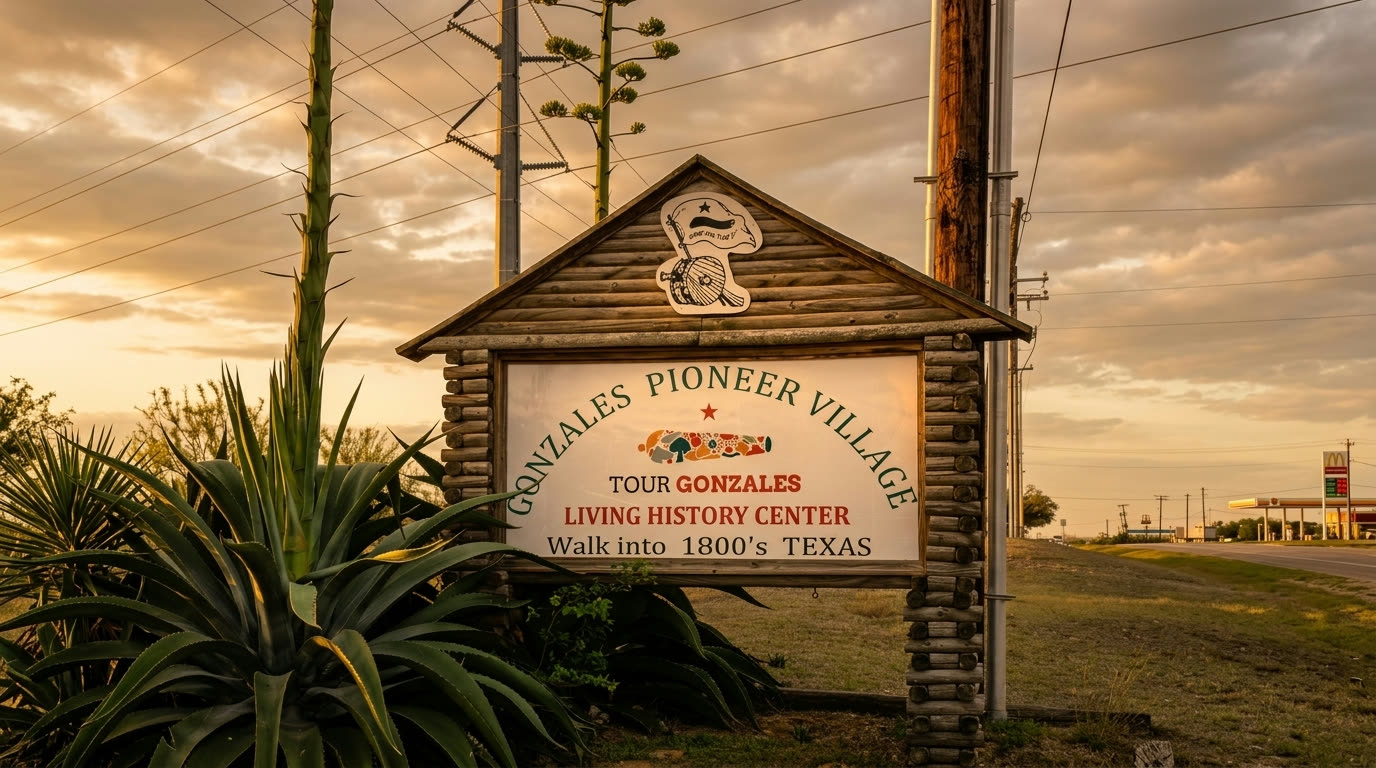
Ten relocated 1800s pioneer-era buildings on a single site — log homes, a blacksmith shop, a broom factory, a smokehouse, and di 1870s cypress-sided Hamon Church. Regular demonstrations and reenactments bring di period to life. Address: 2122 North St. Joseph Street.
Gonzales County Jail Museum
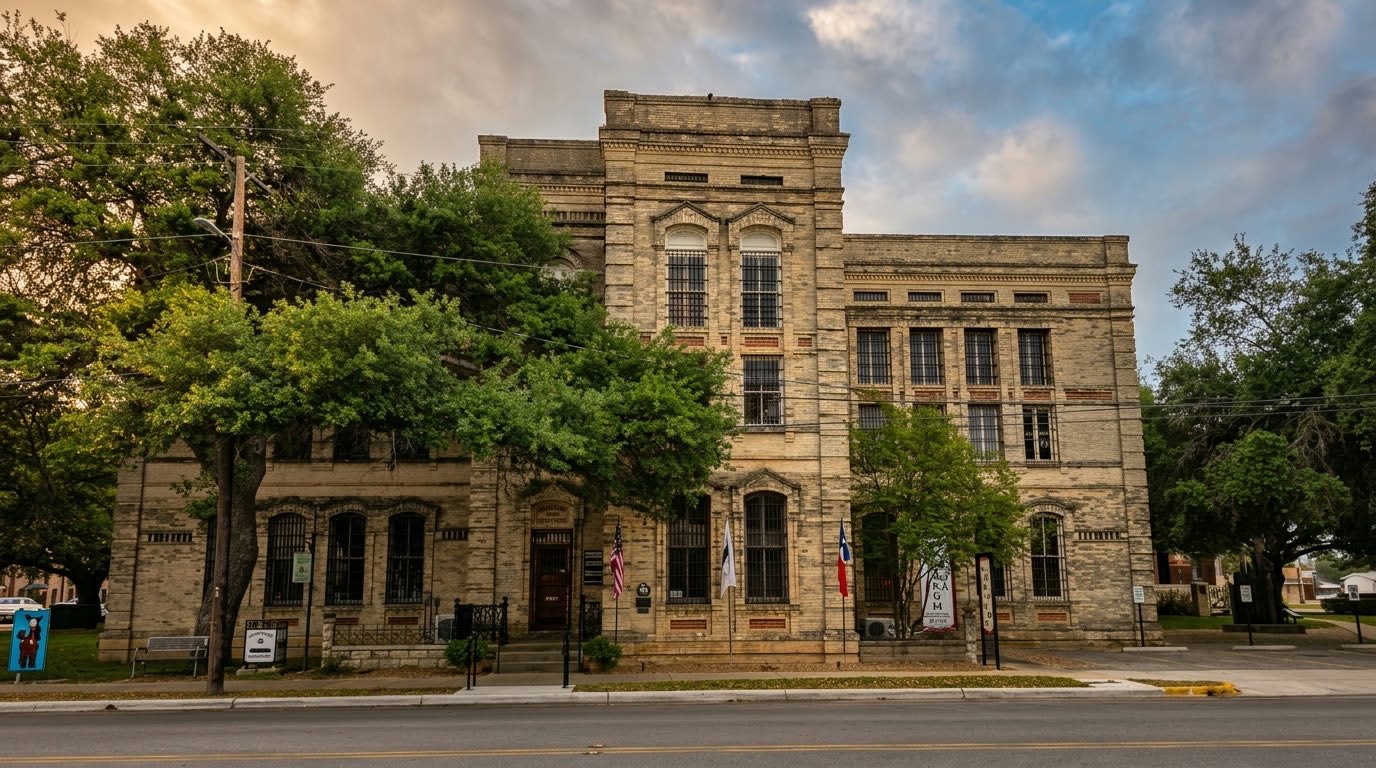
Built in 1887, di original jail is one of di best-preserved Victorian-era lockups in di state. Tours take you through sheriff and jailer quarters, original cells, a hanging room, and a reconstructed gallows in di courtyard. Unforgettable.
J.B. Wells House Museum
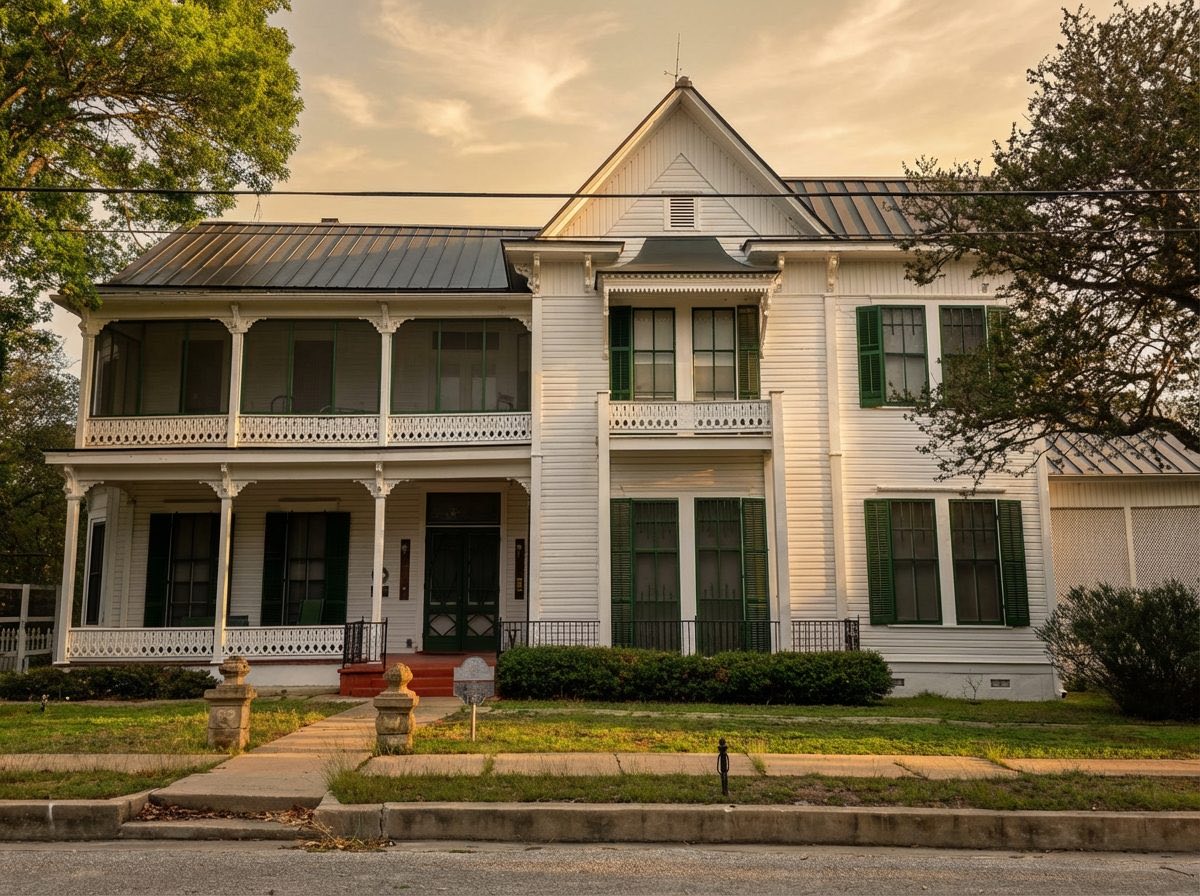
An 1885 Victorian mansion built for one of Gonzales’s most prominent attorneys. Fifteen rooms, indoor plumbing, fire escapes, and lightning rods made it a marvel of its day. It still is.
Di Eggleston House
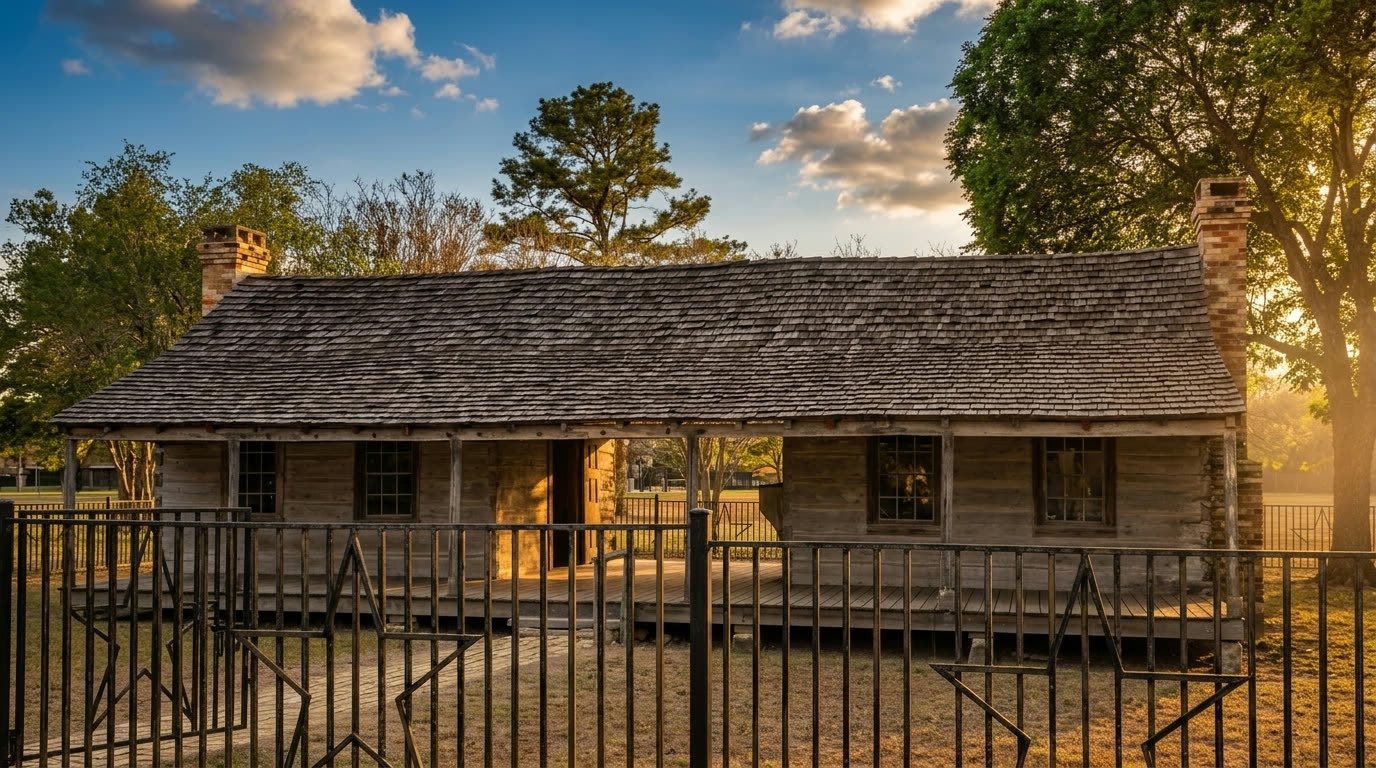
Believed to be di oldest standing structure in Gonzales, di 1840s Eggleston dogtrot cabin has been relocated to a lot near downtown and is open for viewing.
1896 Gonzales County Courthouse
Di Romanesque Revival centerpiece of di historic square, one of di most beautiful small-town courthouses in Texas.
Memorial Cemetery and Masonic Cemetery
Two historic cemeteries wit markers dating from di 1830s onward. Di memorial cemetery at Pioneer Village honors di fallen of di Alamo.
Signature History Events
- Come and Take It Celebration — first full weekend of October. A three-day festival commemorating di 1835 battle, wit a parade, cook-off, 5K, reenactments, art show, car show, and live music. See di Come and Take It Celebration Guide.
- Runaway Scrape Commemoration — early March. Events, reenactments, and candlelight tributes marking di fall of di Alamo and di 1836 evacuation of Gonzales.
- Texas Independence Day — March 2, celebrated locally wit special programming at di Memorial Museum and Pioneer Village.
Why Gonzales History Matters
Plenty of Texas towns claim a slice of revolutionary history. Gonzales owns di largest single share of di opening chapter. Without di cannon and di flag, e get no Battle of Gonzales. Without di Battle of Gonzales, di revolution doesn’t have its opening shot or its rallying cry. Without di Immortal 32, di Alamo has no reinforcements — and no Texas town can say it answered Travis’s letter. Without di Runaway Scrape, e get no retreat-and-regroup dat leads to San Jacinto.
Di phrase Come and Take It has outlived di war itself. Today you’ll see it on flags, bumper stickers, T-shirts, beer labels, and shop windows across di state — a shorthand for Texan defiance, self-reliance, and independence. Di original is right here, at di museum dat was built to honor it.
How to Experience Gonzales History in One Day
A workable history-only itinerary:
- 9:30 a.m. — Start at di Gonzales Memorial Museum.
- 11:00 a.m. — Walk di historic square an di 1896 courthouse.
- 12:00 p.m. — Lunch on di square.
- 1:30 p.m. — Tour di Gonzales County Jail Museum.
- 3:00 p.m. — Visit di J.B. Wells House Museum or Pioneer Village.
- 5:30 p.m. — Dinner at Gonzales Bistro or Hard Times Tavern.
- 8:25 p.m. — Texas Legacy in Lights on di museum lawn.
See di How to Spend 24 Hours in Gonzales, Texas and What to Do in Gonzales If You Love Texas History guides for more.
Final Thoughts
Di cannon is still here. Di courthouse is still here. Di names of di Immortal 32 are still carved into a wall you can touch. In a state dat often moves so fast it forgets its own beginnings, Gonzales is di town dat refuses to. Spend a weekend here and you don’t just read about di birth of Texas — you walk through it.
Pair dis history guide wit di Gonzales, Texas visitor guide, di wetin to do in Gonzales, Texas page, and di Come and Take It Celebration Guide to complete your trip planning.